
Use any volatility indicator
Wildflower Trading School · Lesson 2.4.8.8 · This exercise is free

This lesson works towards your own indicator strategy: a signal and a filter you chose from Studio's indicators, every number yours, checked trade by trade, and drawn on your own chart platform. Today is line four: a level in ticks.
1 of 9
What you'll learn
- The ATR reads in ticks. The level is how far a candle moves.
- A level the market always clears skips nothing. Try a few shows it.
- A skipped trade can let another in, so counts don't only go down.
- Most traders use the ATR for stop size more than as a filter.
Exercise
- Write line 4, for example: ATR 14 above a number of ticks. Note your target in ticks next to it.
- Open your strategy in Strategies and press Change a rule. Open the Filter step.
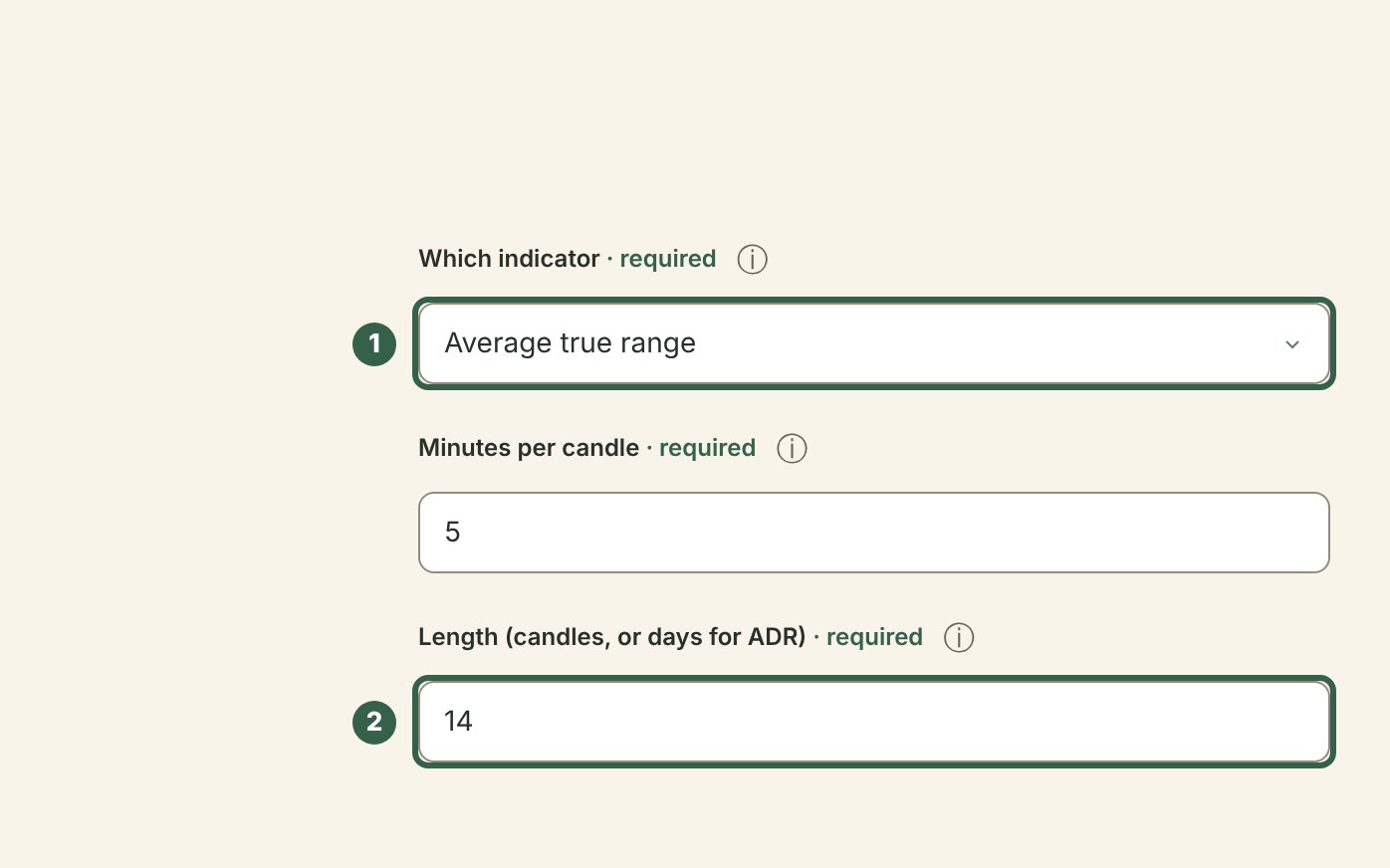
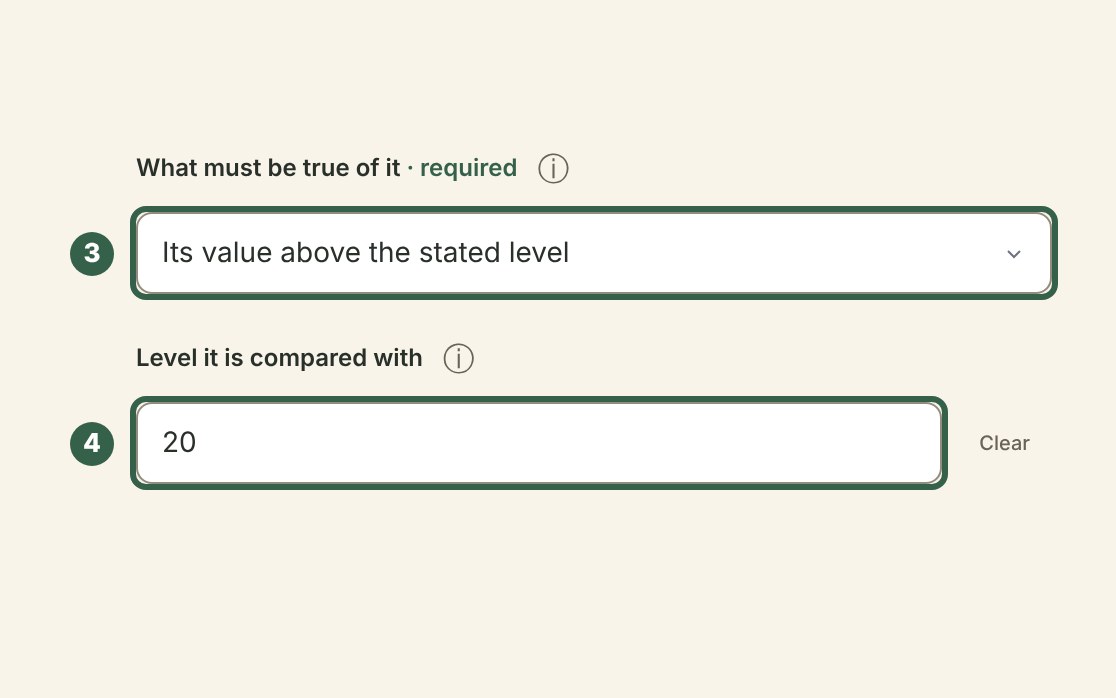
- Change Which indicator to Average true range, fill in Length, and pick Its value above the stated level.
- Click into Level it is compared with, press Help me choose, and run three levels in ticks under Try a few. Check whether the lowest one took the same trades as no filter.
- If you keep a level, press Save, run your check from lesson 2 again, and copy it to your platform again.
- Help article Volatility indicators in Studio
- Help article The indicator condition gate
- Help article Help me choose a setting
Quick check
1. ATR above 10 took the same 18 trades as no filter. Why?
2. ATR above 20: 3 fewer trades, 4 fewer winners. How?
3. To skip markets so wild noise hits the stop, use ATR...
0 of 3 answered.
Finished this lesson?
Tick it off and keep your place
Read the full notes
A volatility indicator measures how far price moves. Wilder's average true range (ATR) is the average size of a candle, including any gap from the close before, and in Wildflower it reads in ticks. As a filter, ATR above a level skips quiet markets. In Wildflower, press Change a rule, open the Filter step and change Which indicator to Average true range. Pick Its value above the stated level, type a number of ticks, and use Try a few on it. A level the market always clears skips nothing, and you only see that by testing.
What you're building. A lesson towards your own indicator strategy: a signal and a filter you chose from Studio's indicators, every number yours, checked trade by trade, and drawn on your own chart platform. Last lesson was a statistics indicator. Today is line 4 with a level in ticks. Next lesson uses a volume indicator.
| My indicator rule |
|---|
| 1. The signal: … (which indicator, and what it must do) |
| 2. The signal's numbers: … candles, …-minute candles, the price it reads … |
| 3. The filter: … (which indicator, must hold or must not, buys, sells or both) |
| 4. The filter's level: … in its own unit |
| 5. Stop … ticks, target … times the stop, $… a trade, … to … New York |
| 6. The wait: my strategy needs … candles before it can trade |
| 7. Checked: … trades gone through, and on my platform: … |
Why. Sam is made up, and so are his numbers. His target is 80 ticks away. In a quiet market price may not get there. Wilder's average true range measures how far candles move, and in Wildflower it reads in ticks.
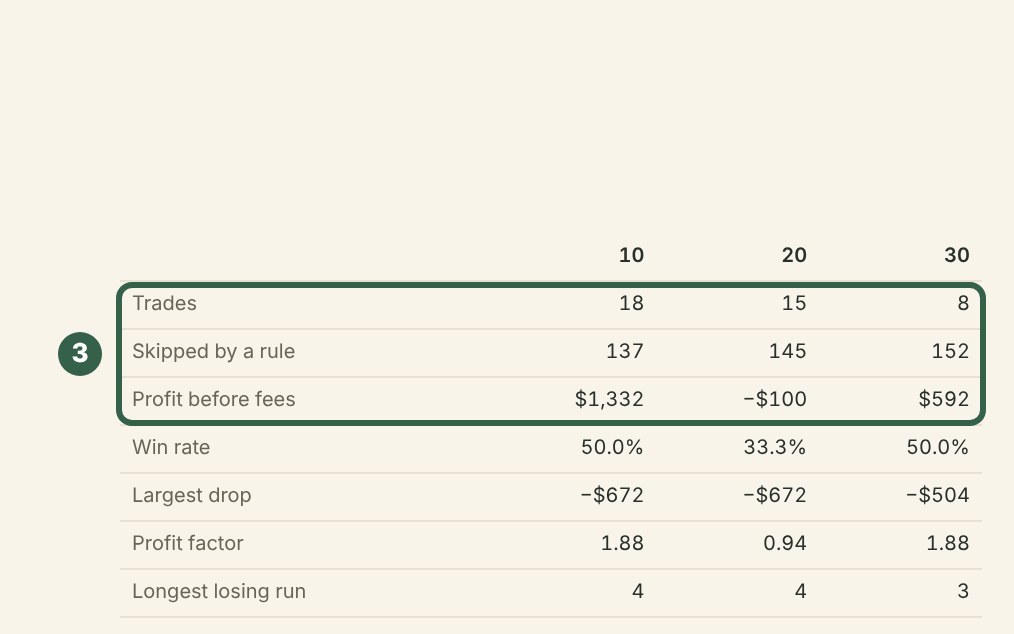
| ATR 14 above | No filter | 10 ticks | 20 ticks | 30 ticks |
|---|---|---|---|---|
| Trades | 18 | 18 | 15 | 8 |
| Won | 9 | 9 | 5 | 4 |
| Profit before fees | $1,332 | $1,332 | -$100 | $592 |
A level that skips nothing. ATR above 10 took the same 18 trades as no filter, because every signal came with candles moving more than 10 ticks. A different trade. At 20 there were 3 fewer trades but 4 fewer winners, so at least one trade was new. Sam takes one setup at a time, so a skipped signal leaves him free for a later one.
How traders use the ATR. We can't tell you which to choose. These are the common uses. Most size the stop with it, such as 2 ATRs from the entry. As a filter, a floor skips quiet markets and a ceiling skips wild ones.
Worked example
Made-up numbersReading Sam's ATR row
Sam is made up. Buys only. His filter is ATR 14 above 20 ticks. His target is 80 ticks.
- The signal says buy at lunchtime. The last 14 candles averaged 12 ticks each. The filter says no.
- The next morning the signal fires again. Candles have averaged 26 ticks. The trade is taken.
- At 26 ticks a candle, 80 ticks is about three candles' worth of movement. At 12, it's nearly seven.
The filter skips the signals where the target is a long way off in candle terms.
Trading is risky. You can lose money. This lesson shows how Wildflower works. It isn't advice.