
A Repulse signal with a trend quality filter
Wildflower Trading School · Lesson 2.4.8.17 · This exercise is free

This lesson works towards your own indicator strategy: a signal and a filter you chose from Studio's indicators, every number yours, checked trade by trade, and drawn on your own chart platform. Today is lines one and three, with two checks in one filter.
1 of 11
What you'll learn
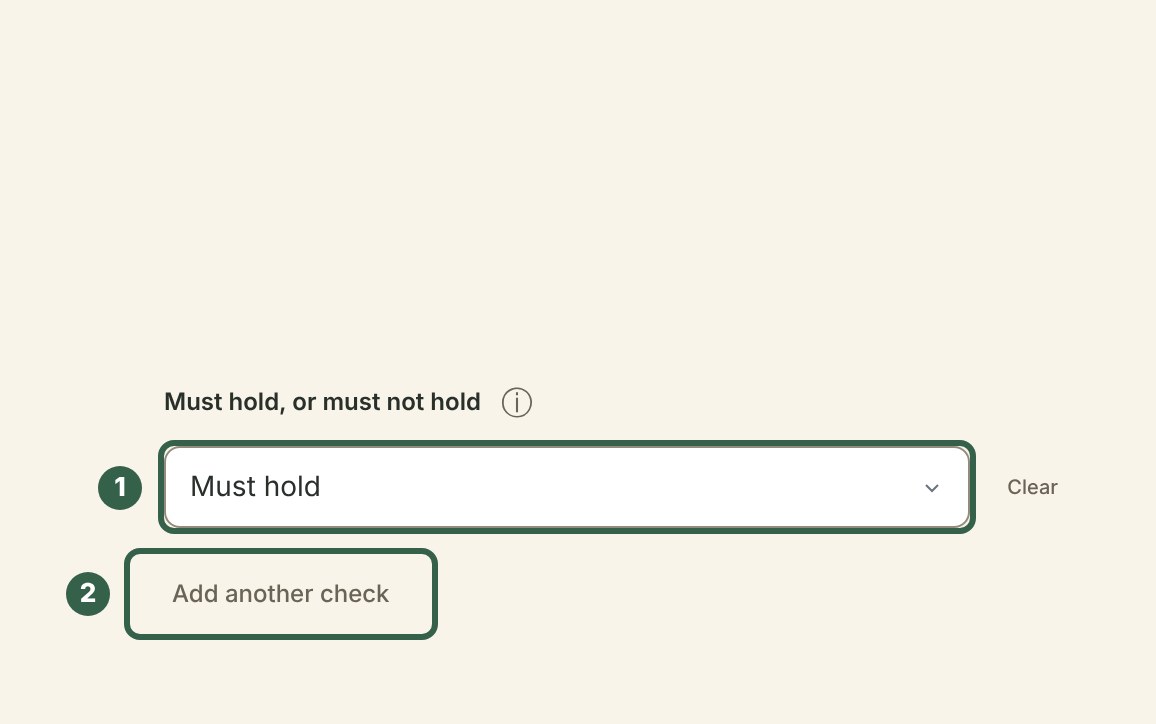
- Add another check puts a second row in the filter. Every row must pass.
- RSI plus trend quality took 18 trades, the same as trend quality alone.
- With two rows, Why no trade here? doesn't say which one said no.
- Trend quality didn't lift the win rate. It stayed near a third.
Exercise
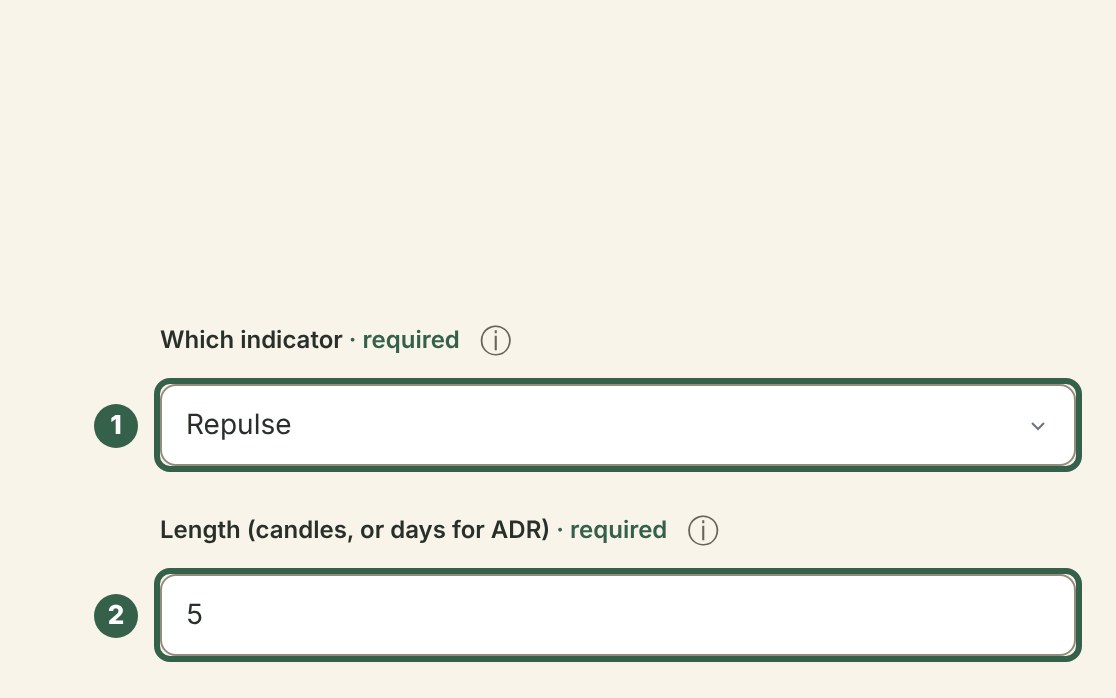
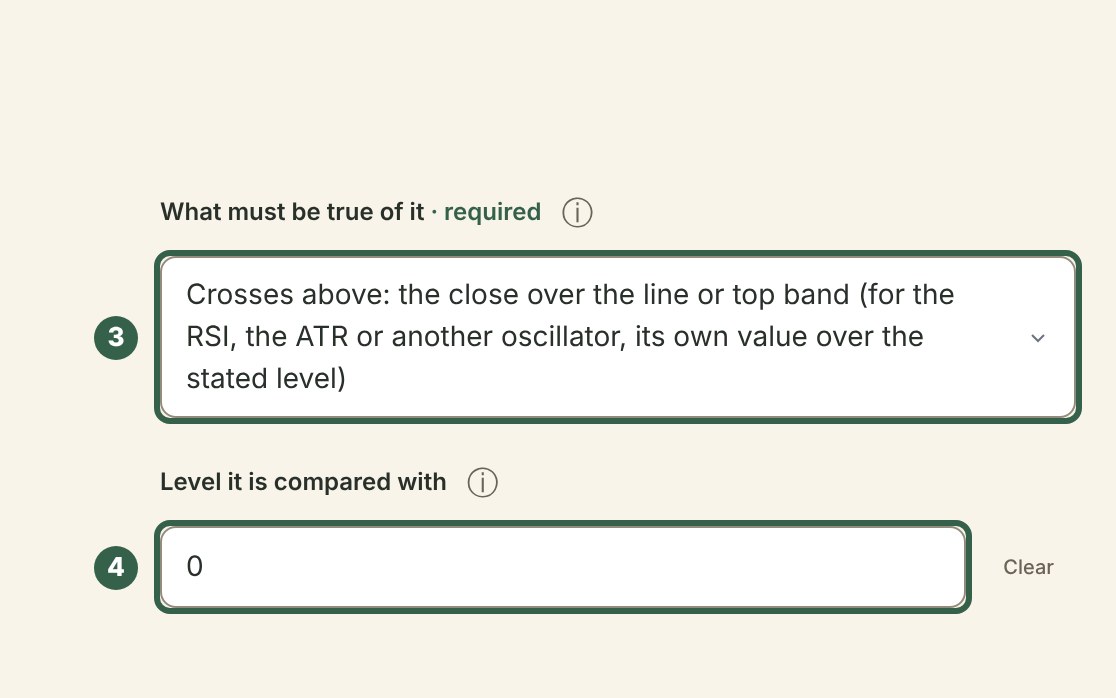
- Open your strategy in Strategies and press Change a rule. On the Signal step press the three dots, then Change, and pick Indicator signal: Repulse, Length 5, Crosses above, level 0.
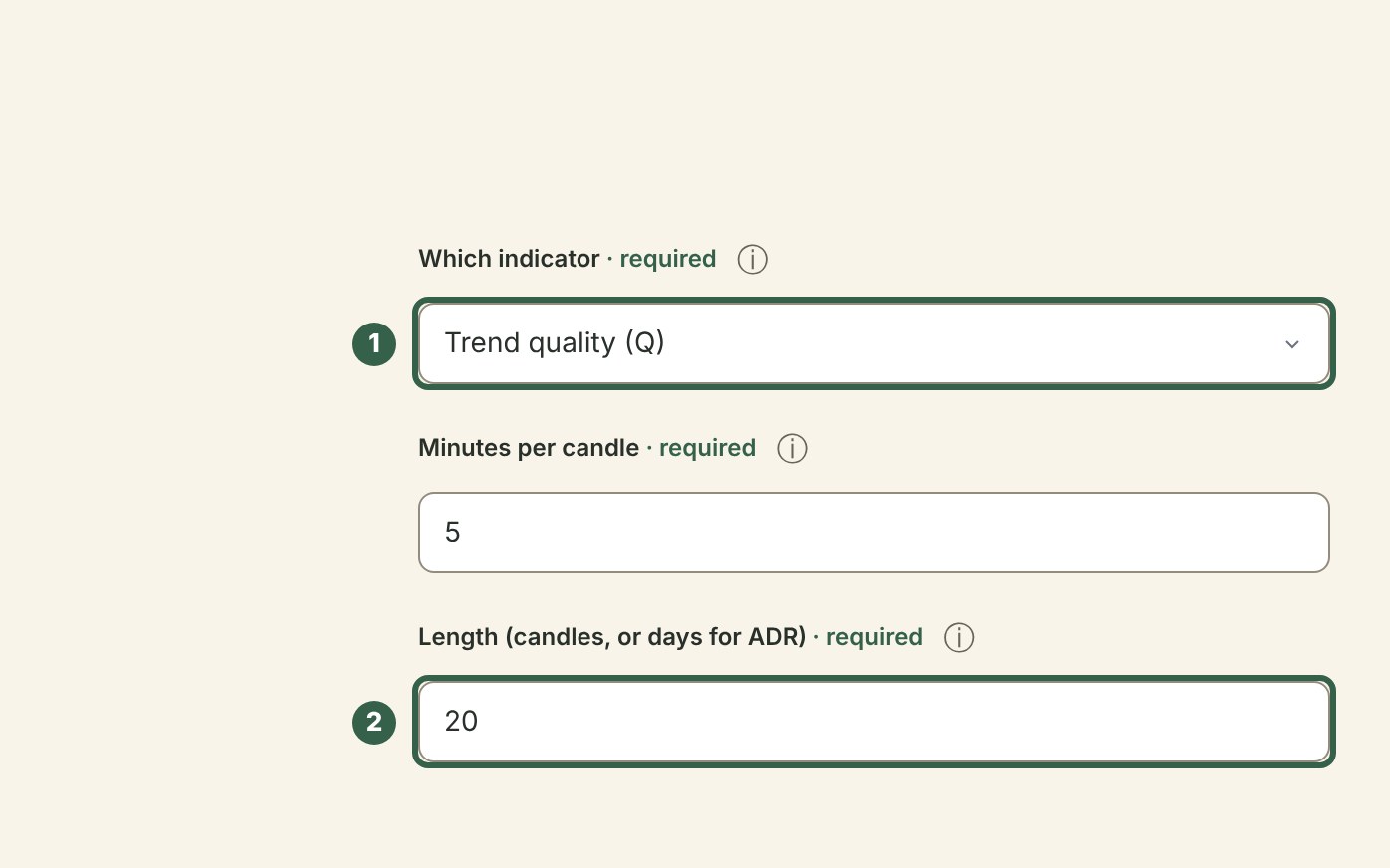
- On the Filter step, change Which indicator to Trend quality (Q), Length 20, Its value above the stated level 0. Then press Add another check and add your old row back.
- Backtest it, find a Repulse cross with no trade, and read Why no trade here?.
- Run each row on its own, with the other removed, and write down the trades each takes, then both.
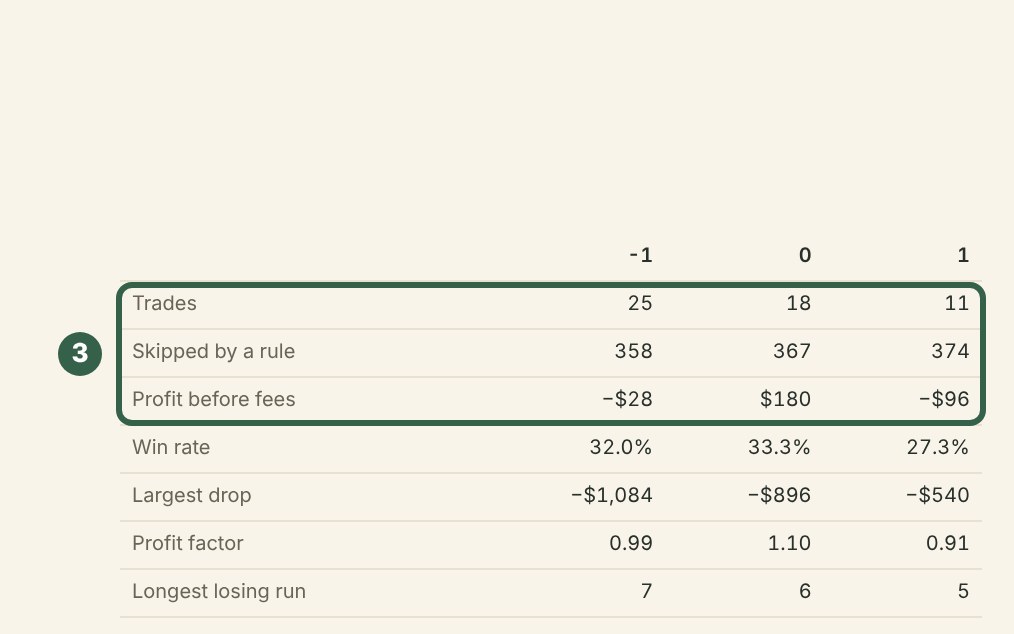
- Click into trend quality's level, press Help me choose, and run -1, 0 and 1 under Try a few.
- Help article Range indicator, Repulse, REI, trend quality and five more in Studio
- Help article The indicator condition gate
- Help article Why no trade here, and rule break flags
Quick check
1. RSI alone 39, trend quality 18, both 18. What did RSI add?
2. With two rows, what does Why no trade here? say?
3. With one row, what does Why no trade here? name?
0 of 3 answered.
Finished this lesson?
Tick it off and keep your place
Read the full notes
A filter can hold more than one check. Press Add another check under the filter's row, and a trade is taken only when every row passes. A second check that agrees with the first adds nothing: Sam's RSI above 50 and trend quality above 0 took the same 18 trades as trend quality alone. On the backtest chart, Why no trade here? names the indicator when a filter has one row, and says the candle did not pass one of your indicator conditions when it has two. In Wildflower, change the signal to Repulse crossing above 0, then set the filter's rows.
What you're building. A lesson towards your own indicator strategy: a signal and a filter you chose from Studio's indicators, every number yours, checked trade by trade, and drawn on your own chart platform. Last lesson read what a filter turned away. Today is lines 1 and 3, with two checks in one filter. Next lesson compares two versions side by side.
| My indicator rule |
|---|
| 1. The signal: … (which indicator, and what it must do) |
| 2. The signal's numbers: … candles, …-minute candles, the price it reads … |
| 3. The filter: … (which indicator, must hold or must not, buys, sells or both) |
| 4. The filter's level: … in its own unit |
| 5. Stop … ticks, target … times the stop, $… a trade, … to … New York |
| 6. The wait: my strategy needs … candles before it can trade |
| 7. Checked: … trades gone through, and on my platform: … |
Why. Sam is made up, and so are his numbers. A filter can hold several checks, and a trade is taken only when every row passes. A row that always agrees with another adds nothing, and you can only find that out by running each one on its own.
| Repulse 5 crosses above 0 | No filter | RSI above 50 | Trend quality above 0 | Both rows |
|---|---|---|---|---|
| Trades | 43 | 39 | 18 | 18 |
| Won | 14 | 13 | 6 | 6 |
| Profit before fees | -$840 | -$652 | $180 | $180 |
| Trend quality above | -1 | 0 | 1 | 2 | 5 |
|---|---|---|---|---|---|
| Trades | 25 | 18 | 11 | 7 | 6 |
| Won | 8 | 6 | 3 | 3 | 3 |
| Profit before fees | -$28 | $180 | -$96 | $424 | $444 |
Why no trade here? With one row in the filter it names the indicator, for example: the last closed candle did not meet your relative strength index condition. With two rows it says the last closed candle did not pass one of your indicator conditions. To find which, run each row on its own.
How traders use these two. We can't tell you which to choose. These are the common uses. Repulse, from Eric Lefort, crossing above 0 as a buy signal. Trend quality, from David Sepiashvili, to tell a clean trend from noise, though it's far less widely used than the RSI or the ADX. And stacked checks that measure different things, since two that measure the same thing tend to agree.
Worked example
Made-up numbersFinding which row said no
Sam is made up. Buys only. Signal, Repulse 5 crosses above 0. Filter, RSI 14 above 50 and trend quality above 0.
- On the backtest chart, Repulse crossed above 0 at 10:15, but no trade was taken.
- Why no trade here? says the last closed candle did not pass one of your indicator conditions.
- Sam runs the RSI row alone: the 10:15 trade is there. He runs trend quality alone: it isn't. Trend quality was below 0.
With two rows, running each one on its own is how you find which one said no.
Trading is risky. You can lose money. This lesson shows how Wildflower works. It isn't advice.