
Check your pattern on your strategy's chart
Wildflower Trading School · Lesson 2.2.5.5 · This exercise is free

This is the fifth of six lessons towards your own candle pattern strategy, written down and checked trade by trade. Today is line seven, and the goal: your strategy, checked one trade at a time.
1 of 13
What you'll learn
- Press Backtest on your strategy's page, check your rules, and pick the Practice chart.
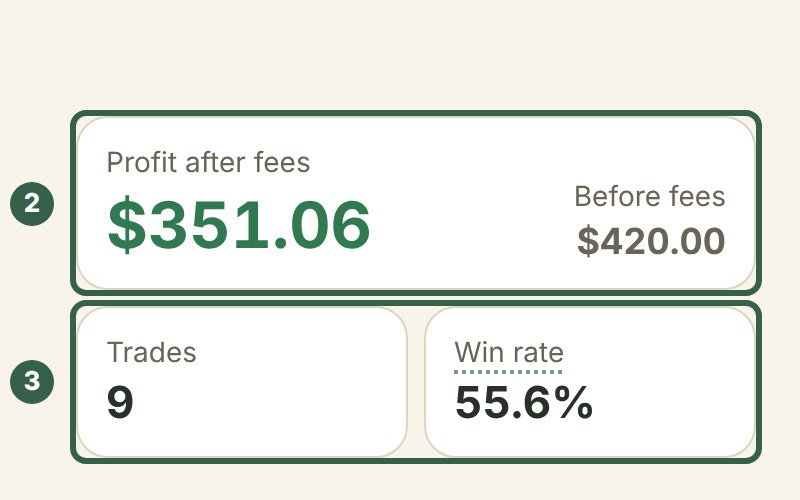
- Read the number of trades first, then the profit before and after fees.
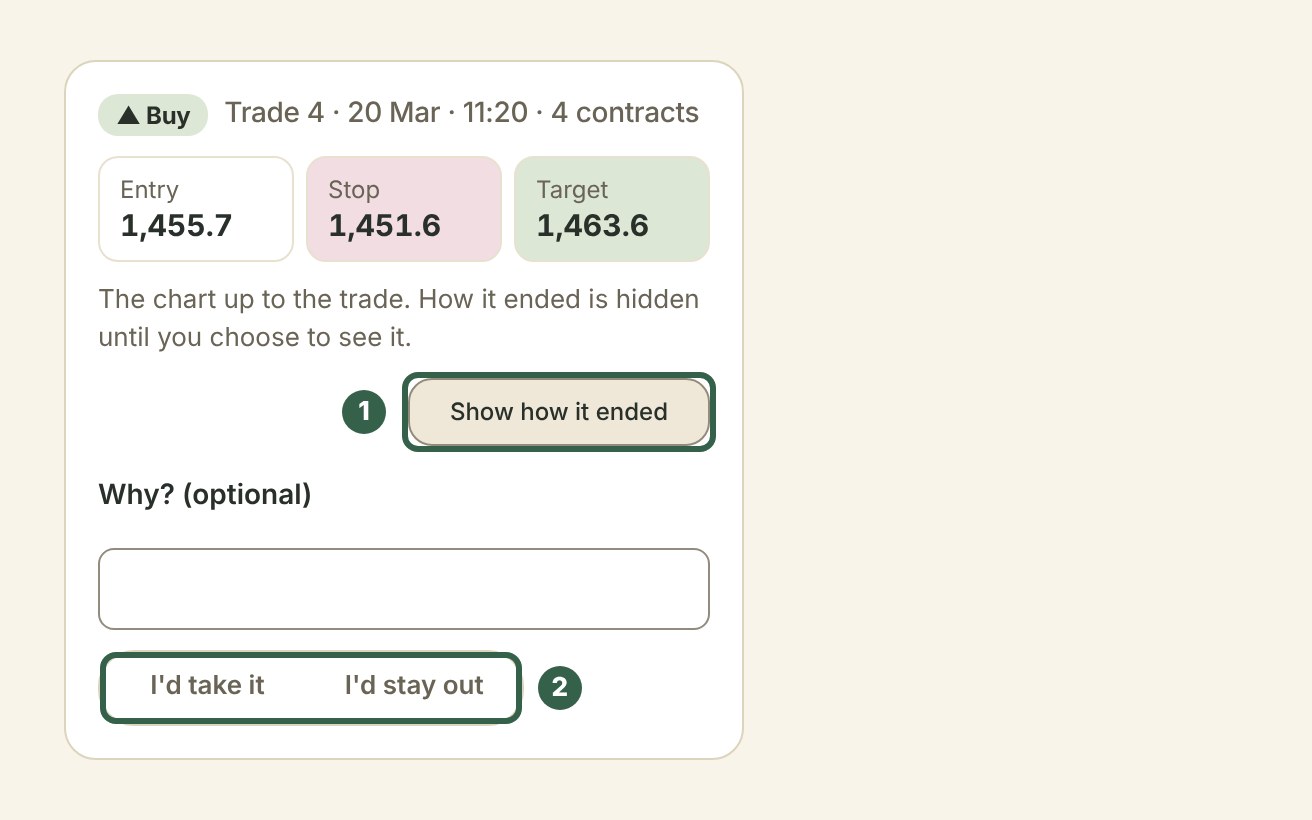
- Press Go through the trades, and say I'd take it or I'd stay out on each one.
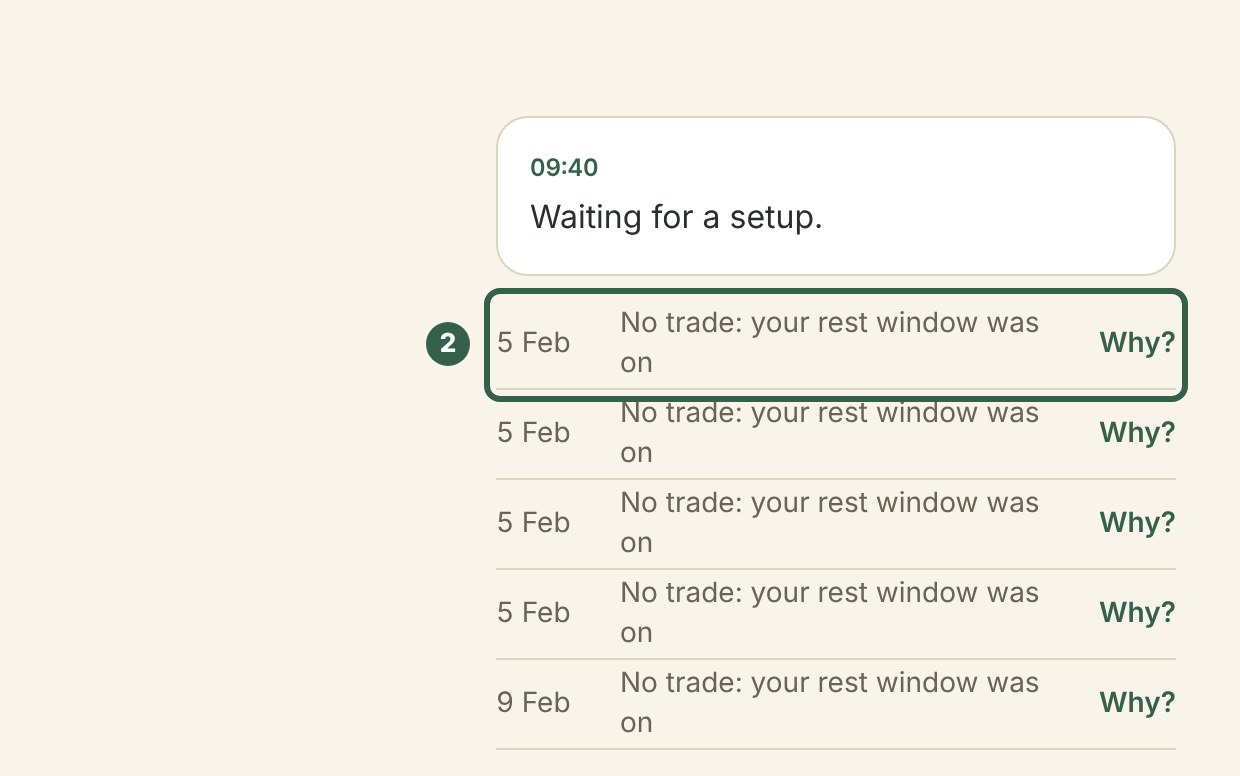
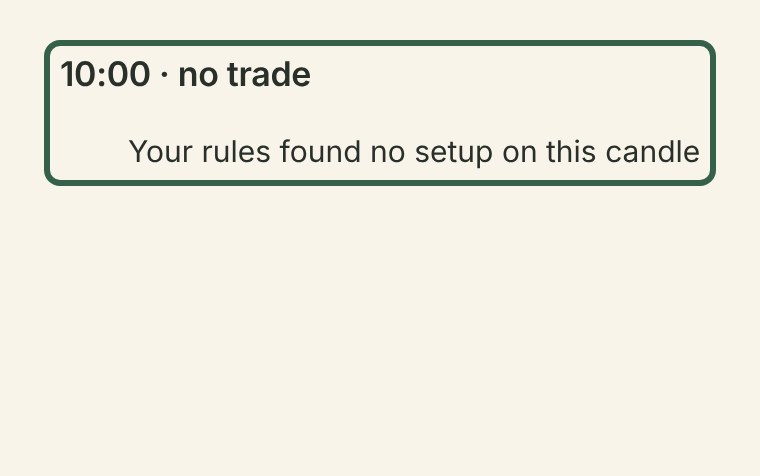
- Use Replay and Why no trade here? on a candle you expected to trade.
- Write line 7. How many trades, gone through one by one. Your rule is checked.
Exercise
- Open your strategy in Strategies and press Backtest.
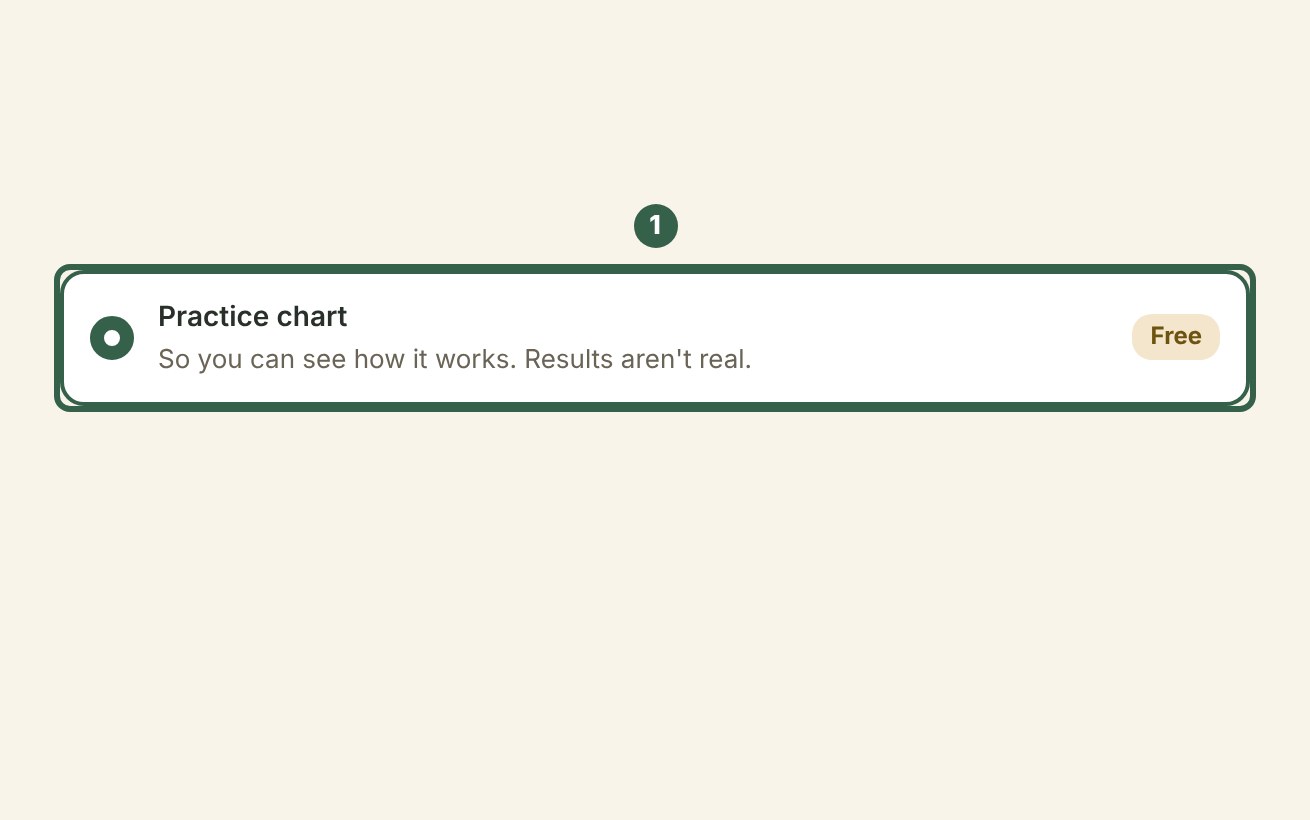
- Check your rules, press Looks right, pick Practice chart and Show me the results.
- Read the number of trades first, then press Go through the trades and mark each one.
- Open Replay, and use Why no trade here? on a candle you expected to trade.
- Write line 7 of your candle pattern rule: how many trades, gone through one by one.
- Help article Backtest your strategy
- Help article Go through your backtest's trades
- Help article Replay a backtest
Quick check
1. What do you read first on the results page?
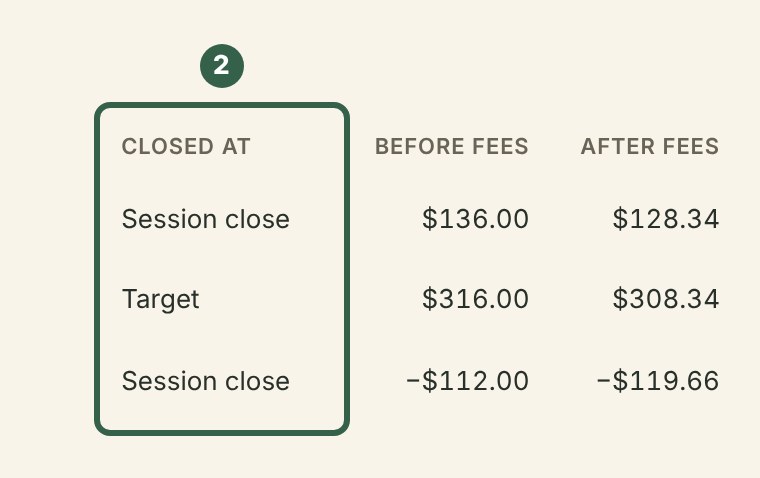
2. A trade's Closed at says Session close. What happened?
3. A candle you expected to trade didn't. Where do you look?
0 of 3 answered.
Finished this lesson?
Tick it off and keep your place
Read the full notes
A backtest total hides trades your rules took that you wouldn't have. Going through each trade finds a rule that doesn't say what you meant. In Wildflower, open your strategy and press Backtest. Check your rules, pick the free Practice chart, and press Show me the results. Read the number of trades first, then press Go through the trades and say whether you'd take each one. Replay shows the chart candle by candle, and Why no trade here? says why a candle you expected didn't trade.
What you're building. The fifth of six lessons towards your own candle pattern strategy. Lessons 1 to 4 wrote lines 1 to 6. Today is line 7, and the goal: your strategy, checked one trade at a time. Next lesson is for changing line 1.
| My candle pattern rule |
|---|
| 1. The pattern: … (bullish or bearish twin) |
| 2. Its numbers: … (long wick, small body) |
| 3. When it trades: its close, or a later close within … candles |
| 4. A filter: … there, not there, or none |
| 5. Stop … ticks, target … times the stop, $… a trade |
| 6. …-minute candles, … to … New York, days … |
| 7. Checked: … trades, gone through one by one |
Why. Sam is made up, and so are his numbers. A total hides the trades inside it. Each trade shows whether your rule says what you meant, and a candle that didn't trade is the quickest way to find a gap.
| Sam's Version 2, practice chart | |
|---|---|
| Dates | 3 Feb to 26 May |
| Trades | 9 (5 won) |
| Profit before fees | $420.00 |
| Profit after fees | $351.06 |
| Largest drop | −$351 |
How traders go through a backtest. We can't tell you which to choose. These are the common choices. Every trade, or the first 20 and every loss. Decide before seeing how it ended, or after. When a trade is wrong, change the rule, or change line 2 of the plan. More on counting and trusting results: Testing a pattern before trusting it and Why many candle patterns fail. Running it forward with pretend money: Run your strategy forward on the demo.
Worked example
Made-up numbersSam's line 7
Sam is made up. Version 2 on the practice chart, 3 February to 26 May, $200 a trade.
- 9 trades, 5 won. +$420 before fees, +$351.06 after, about $8 of fees a trade.
- He goes through all 9: I'd take it or I'd stay out on each, before Show how it ended.
- He checks the 10:00 candle on 25 March in Why no trade here?: 1.5 times the body, under his 2.
- His rule does what he meant, so he changes nothing.
Line 7: 9 trades on the practice chart, gone through one by one. Too few to judge the strategy, enough to check the rule.
Trading is risky. You can lose money. This lesson shows how Wildflower works. It isn't advice.