
Find any candle pattern in Studio's list
Wildflower Trading School · Lesson 2.2.5.6 · This exercise is free

This is the last of six lessons towards your own candle pattern strategy, written down and checked trade by trade. Today is line one again, for any pattern, in case you want to change it.
1 of 9
What you'll learn
- Line 1 again, for any pattern. Write the pattern, and which twin.
- Press Change a rule, then Signal, and open Which candle pattern, 136 patterns in one list.
- Type the first letters to jump to one, and read the words in brackets.
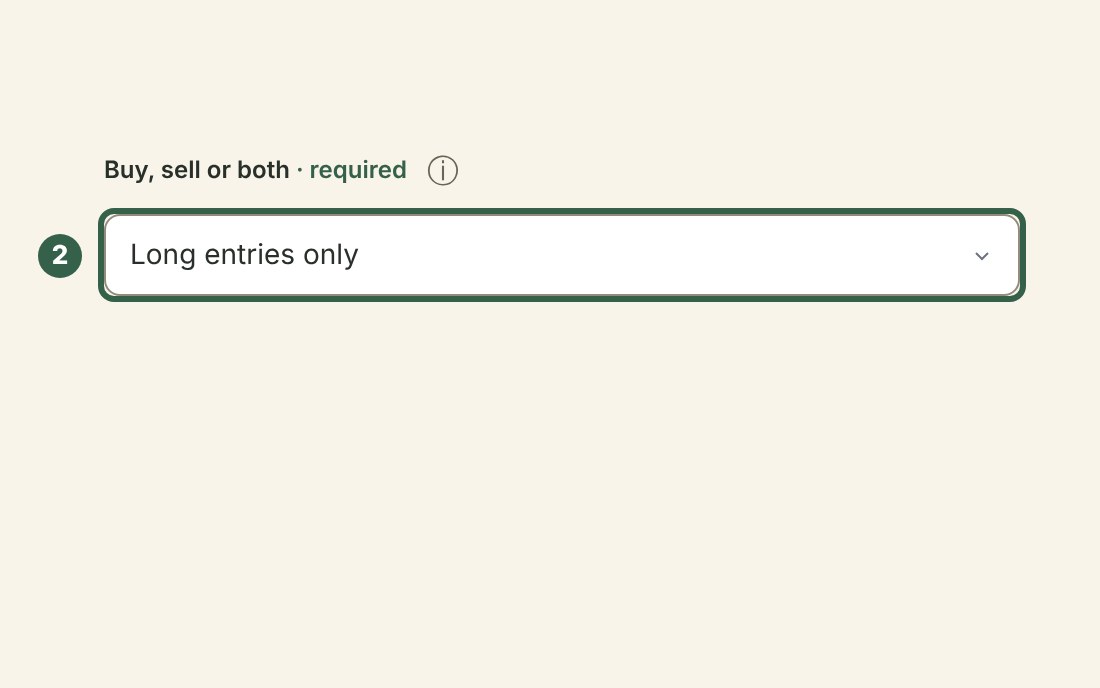
- Check Buy, sell or both matches your twin. A bearish pattern can't trade long entries only.
- If line 1 changes, save, then run your Backtest check again.
Exercise
- Open your strategy in Strategies, press Change a rule, then the Signal step.
- Press Which candle pattern and type the first letters of your pattern. Find its twin too.
- Check Buy, sell or both matches the twin you want.
- If you change line 1, set its numbers, press Save, and run your Backtest check again.
- Help article Candle patterns in Studio
- Help article The candle pattern gate
Quick check
1. The hammer and the hanging man are the same shape. What tells them apart?
2. How do you jump to a pattern in the list of 136?
3. You change line 1 to a bearish pattern. Which box do you check?
0 of 3 answered.
Finished this lesson?
Tick it off and keep your place
Read the full notes
Most candle patterns come in a bullish and a bearish twin, each its own entry, and picking the wrong twin watches for the wrong move. In Wildflower, the pattern is the Which candle pattern box on your signal. Press Change a rule, then the Signal step, and open the box: it lists 136 patterns in one list. Type the first letters to jump to one. Patterns with the same name differ by the words in brackets. Check Buy, sell or both matches the twin you pick, then save and run your Backtest check again.
What you're building. The last of six lessons. Lessons 1 to 5 wrote and checked your candle pattern rule. This one is line 1 again, for any pattern, in case you change it.
| My candle pattern rule |
|---|
| 1. The pattern: … (bullish or bearish twin) |
| 2. Its numbers: … (long wick, small body) |
| 3. When it trades: its close, or a later close within … candles |
| 4. A filter: … there, not there, or none |
| 5. Stop … ticks, target … times the stop, $… a trade |
| 6. …-minute candles, … to … New York, days … |
| 7. Checked: … trades, gone through one by one |
Why. Most patterns come in a bullish and a bearish twin, each its own entry. The hammer and the hanging man are the same shape: after a fall it's a hammer, after a rise a hanging man. Some names repeat, told apart by the words in brackets. More in Hammer and shooting star and Hanging man, inverted hammer and takuri line.
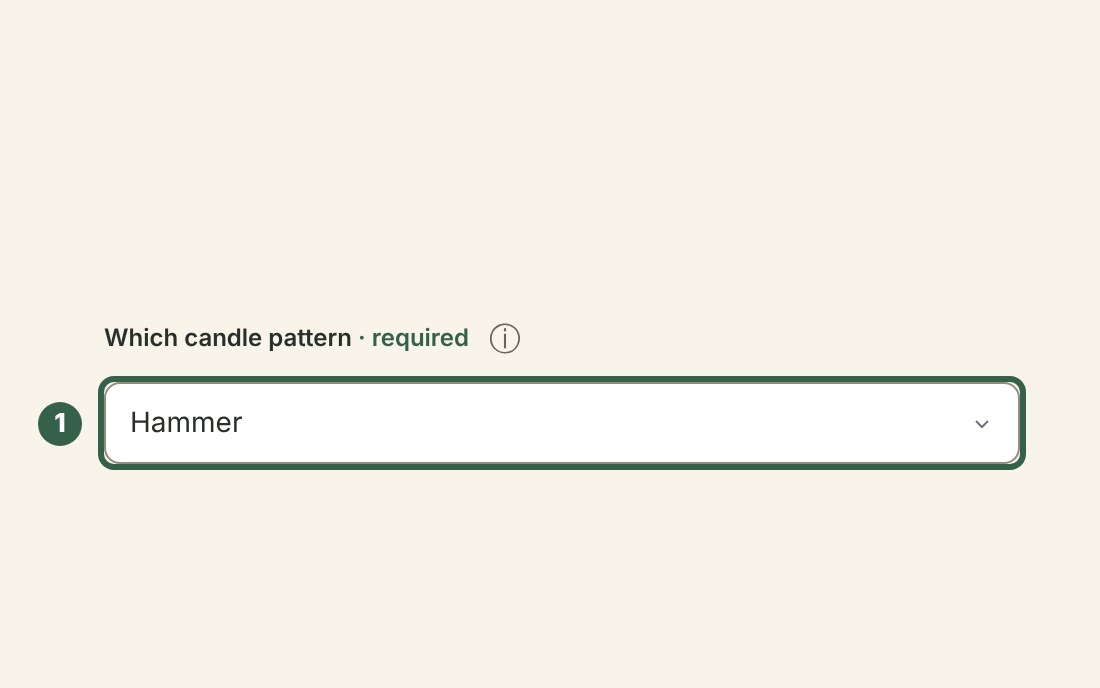
- One list, no groups. Type the first letters to jump: h, a, m goes to Hammer.
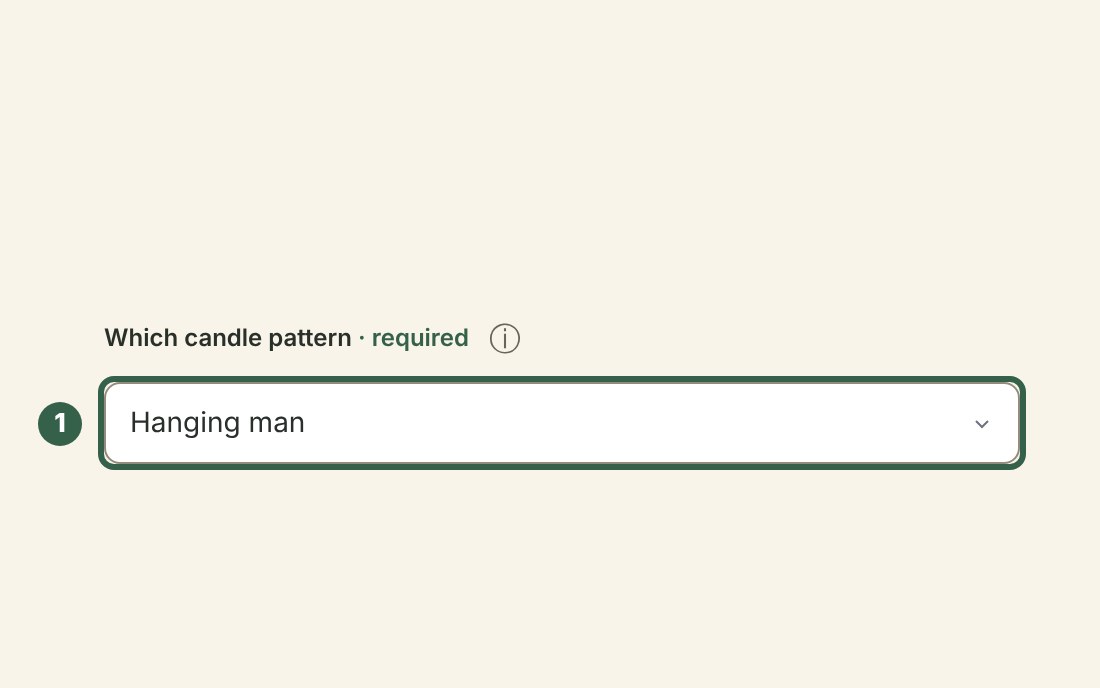
- Twins are separate entries: Hammer and Hanging man, Shooting star (one candle) and Inverted hammer.
- Brackets tell same-name patterns apart: Shooting star (one candle) and Shooting star (after a gap up), Inverted hammer and Inverted hammer (two candles).
If line 1 changes. Set the new pattern's numbers (Find a pattern's numbers with Try a few), press Save for a new version, and run lesson 5's check again. How traders pick a pattern: we can't tell you which to choose. These are the common choices. One they already spot by eye, one twin or both as two strategies, a common pattern for more trades or a rare one with few to judge.
Worked example
Made-up numbersSam checks a twin
Sam is made up. His strategy buys only, with Hammer as its pattern.
- He opens Which candle pattern and types h, a, m. The list jumps to Hammer, with Takuri line, Hanging man and Inverted hammer below it.
- Hanging man is the same shape after a rise, read as bearish.
- His Buy, sell or both says Long entries only, which matches a hammer, not a hanging man.
- He keeps Hammer, so he changes nothing and saves nothing.
Line 1 stays: Hammer, the bullish twin, buys only.
Trading is risky. You can lose money. This lesson shows how Wildflower works. It isn't advice.