
Use a candle pattern as a filter
Wildflower Trading School · Lesson 2.2.5.2 · This exercise is free

This is the second of six lessons towards your own candle pattern strategy, written down and checked trade by trade. Today is line four of your rule: a filter. By the end you'll have a second version of your strategy, and a comparison of the two.
1 of 14
What you'll learn
- Write line 4. The pattern that must be there, or must not be there, or none.
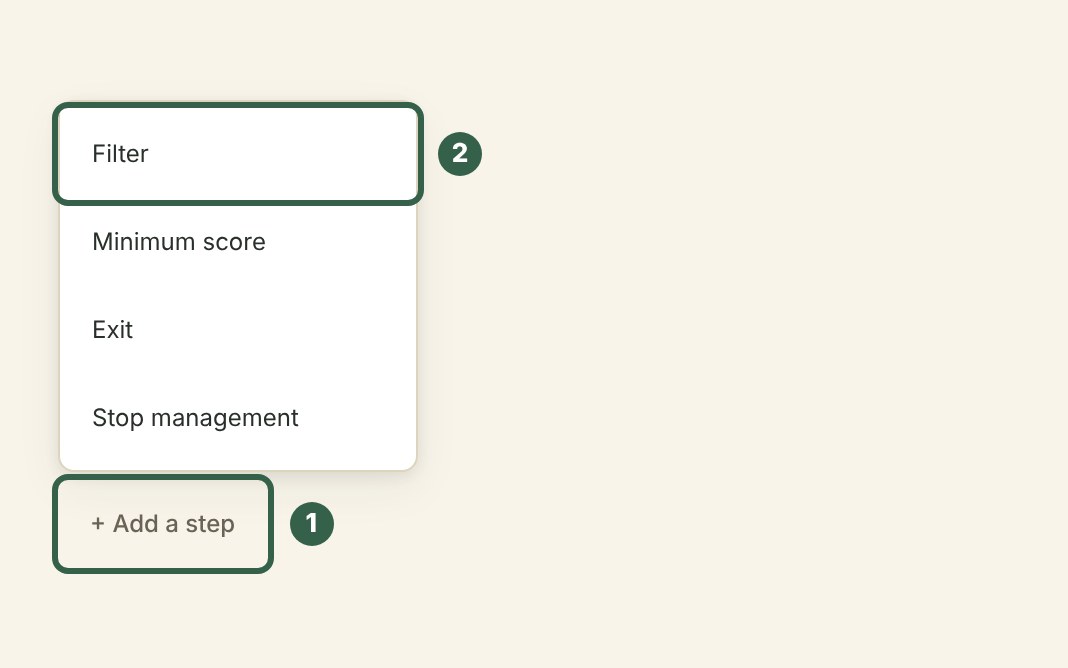
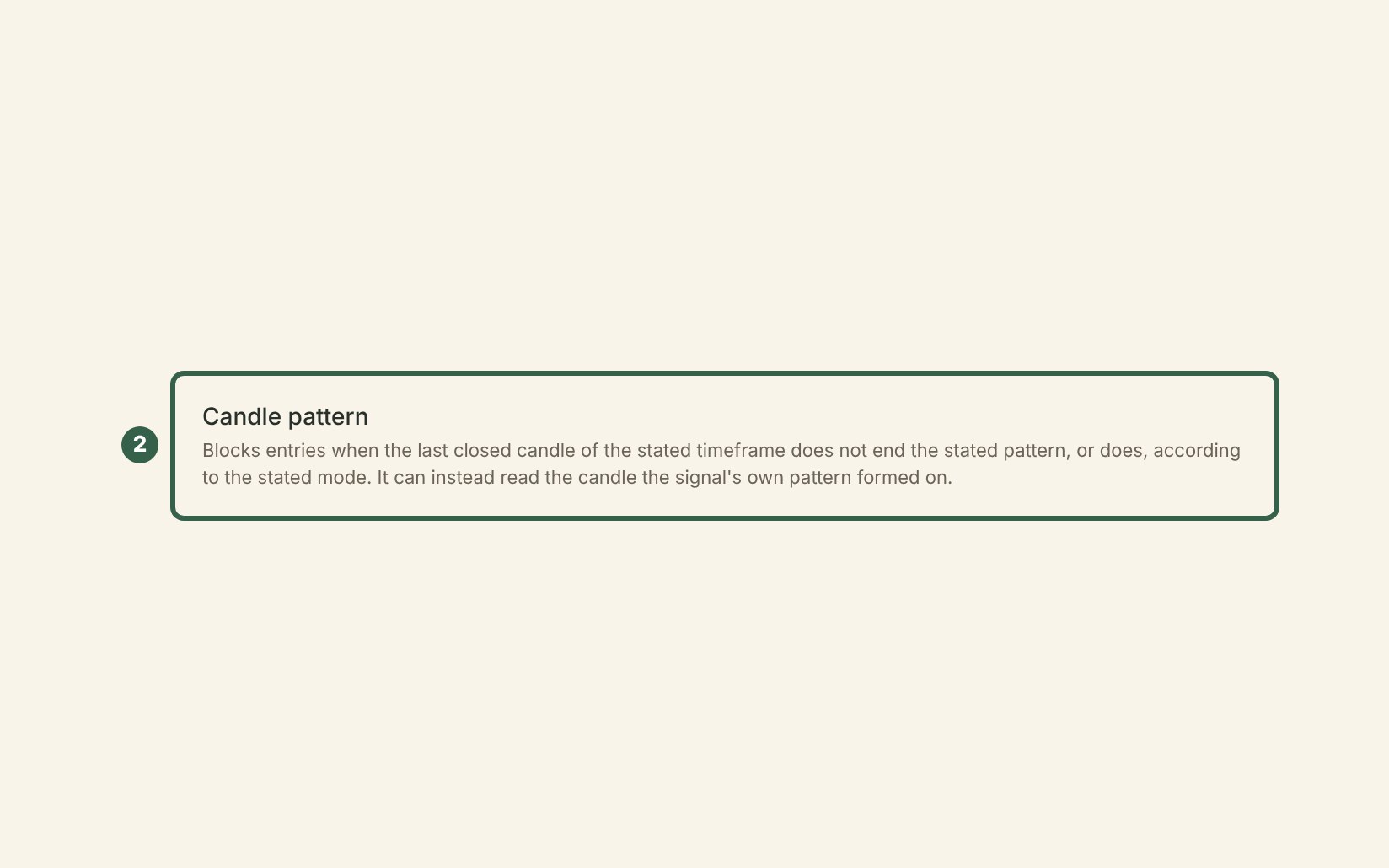
- Press Change a rule, then Add a step, then Filter, and pick Candle pattern.
- Choose Must be present or Must be absent, and which candle it reads, then press Save.
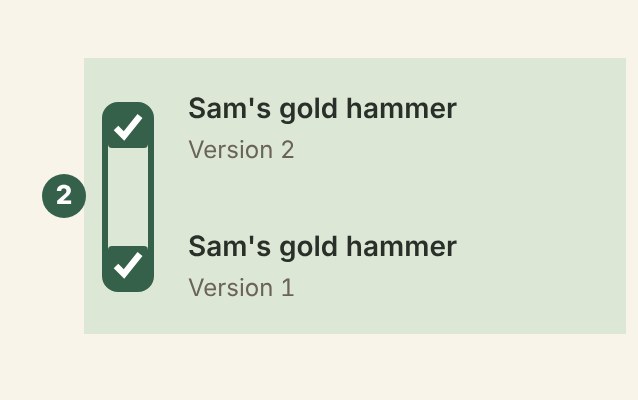
- Compare the two versions in Backtest, Past backtests. Tick both and press Compare.
- Read the trade count first. A handful of trades is too few to judge a filter.
Exercise
- Write line 4 of your candle pattern rule, or write none.
- Backtest Version 1 first: on your strategy's page in Strategies, press Backtest, then Show me the results.
- Press Change a rule, then + Add a step, Filter, and Candle pattern.
- Set the pattern, Must be present or Must be absent, and which candle is read, then press Save.
- Backtest Version 2, then in Backtest press Past backtests, tick both and press Compare.
- Help article The candle pattern gate
- Help article My backtests and comparing runs
- Help article Versions, notes and comparing them
Quick check
1. What can a filter do to your trades?
2. Sam's filter says Doji, Must be absent. What happens when his hammer is also a doji?
3. Version 1 took 13 trades and Version 2 took 9. What do traders look at first?
0 of 3 answered.
Finished this lesson?
Tick it off and keep your place
Read the full notes
A filter skips trades and never adds one, so it can skip losers and winners alike. In Wildflower, you add one to your strategy with Change a rule. Press Add a step, then Filter, search for candle and pick Candle pattern. Choose the pattern, Must be present or Must be absent, and which candle it reads, then press Save. That's a new version. Backtest both versions on the practice chart, tick both in Past backtests and press Compare to see what the filter skipped.
What you're building. The second of six lessons towards your own candle pattern strategy. Last lesson you wrote lines 1, 5 and 6. Today is line 4, a filter. Next lesson is line 3.
| My candle pattern rule |
|---|
| 1. The pattern: … (bullish or bearish twin) |
| 2. Its numbers: … (long wick, small body) |
| 3. When it trades: its close, or a later close within … candles |
| 4. A filter: … there, not there, or none |
| 5. Stop … ticks, target … times the stop, $… a trade |
| 6. …-minute candles, … to … New York, days … |
| 7. Checked: … trades, gone through one by one |
Why. Sam is made up, and so are his numbers. A filter skips trades and never adds one. On his practice chart a full loss costs about $168 with slippage and a full win makes about $316, so a filter that skips the wrong trades costs him. Only a test with and without it tells you. What a doji is: Doji.
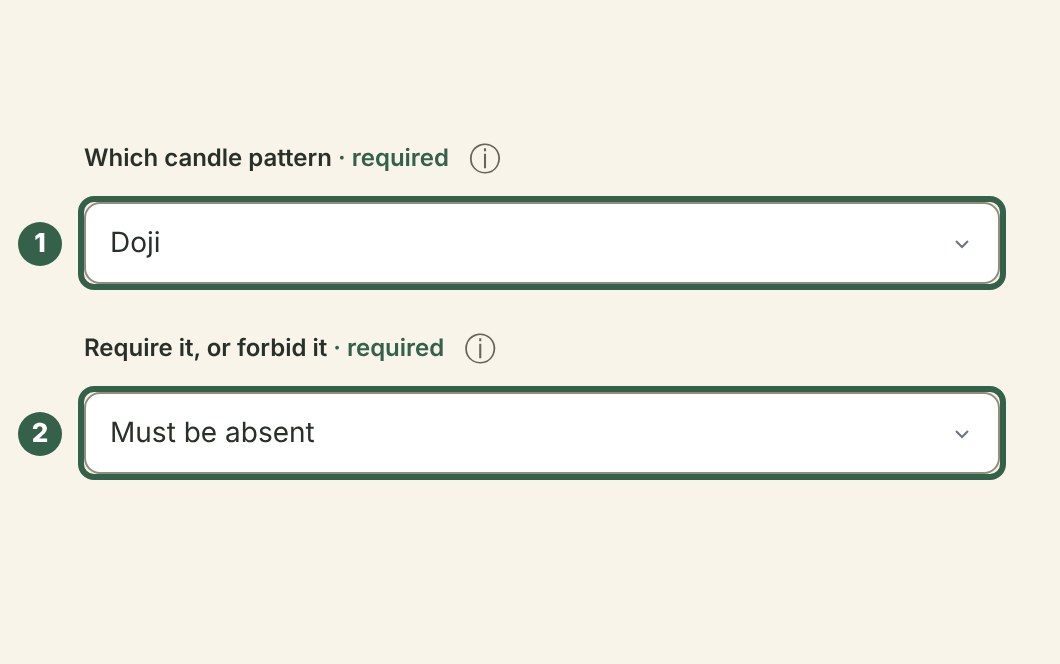
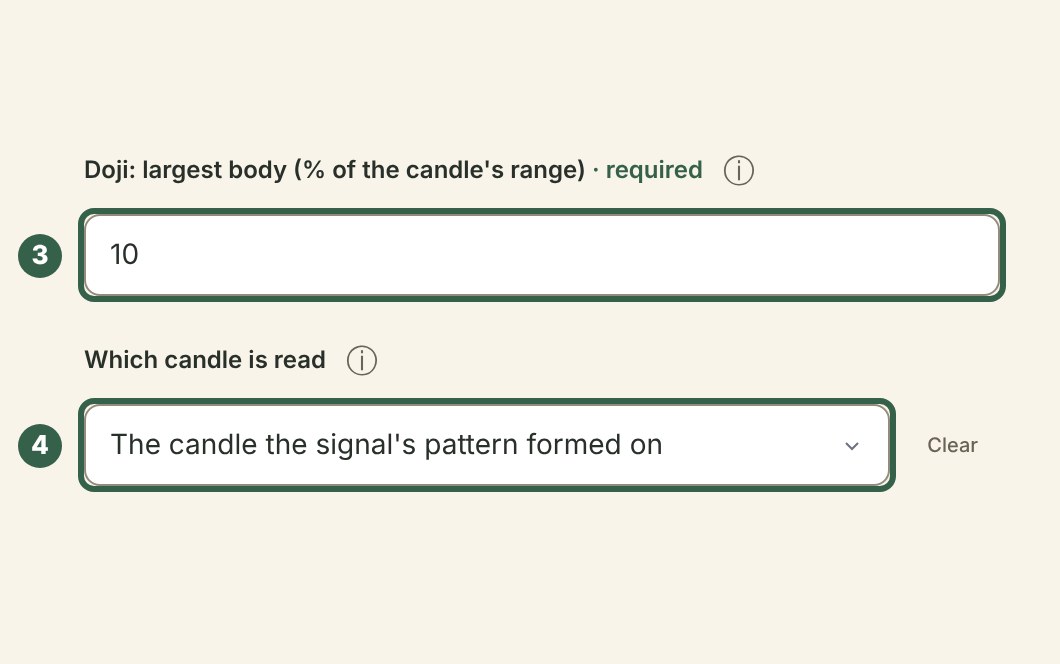
- Must be present only trades when the pattern is there. Must be absent skips the trade when it is.
- Which candle is read: the last closed candle (the one just before the entry), or the candle your signal's pattern formed on.
- Save makes a new version. The old one is kept, so you can compare them or go back.
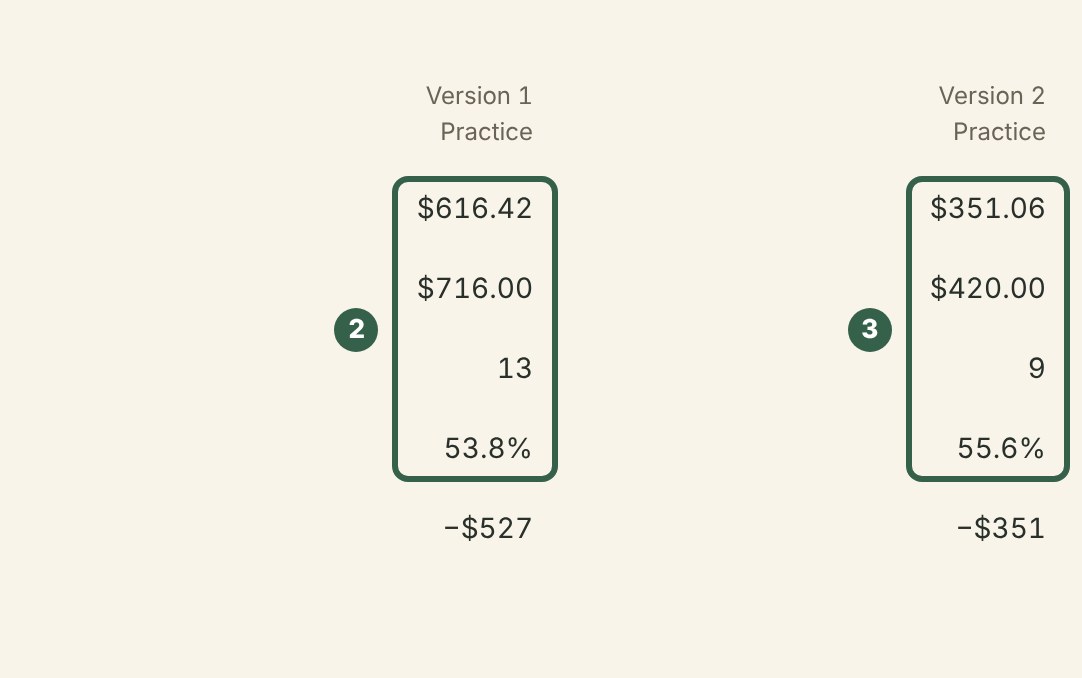
| Version 1 (no filter) | Version 2 (doji must be absent) | |
|---|---|---|
| Trades | 13 | 9 |
| Win rate | 53.8% | 55.6% |
| Profit before fees | $716.00 | $420.00 |
| Profit after fees | $616.42 | $351.06 |
| Largest drop | −$527 | −$351 |
Reading a mixed result. Count the trades first: 13 and 9 are too few to say a filter helps or hurts (Testing a pattern before trusting it). Then look at what it skipped, and what moved. What traders do next: we can't tell you which to choose. These are the common choices. Keep the filter and watch what it skips, drop it and go back to the version before, or test both on more days first. Why so many patterns disappoint: Why many candle patterns fail.
Worked example
Made-up numbersWhat Sam's filter skipped
Sam is made up. On the practice chart, Version 1 took 13 trades and Version 2 took 9. A full win was about +$316 and a full loss about −$168.
- Skipped: 13 − 9 = 4 trades, 2 winners and 2 losers.
- 2 winners: 2 × $316 = $632 not made.
- 2 losers: 2 × $168 = $336 not lost.
- Before fees: $716 − $632 + $336 = $420, Version 2's number.
The filter cost $296 before fees on these 13 trades, and saved fees on 4 trades. Too few trades to judge, so Sam tests more before he decides.
Trading is risky. You can lose money. This lesson shows how Wildflower works. It isn't advice.