
Use the newer chart patterns
Wildflower Trading School · Lesson 2.3.6.8 · This exercise is free

This is the last of eight lessons. Line one again, for the newer shapes.
1 of 9
What you'll learn
- The newer shapes sit in the same list, Which chart pattern.
- Each one adds a box or two of its own, named for the shape.
- The quasimodo trades a touch back at a level, not a close past a line.
- Fill each box marked required with your own number.
- Run your check from lesson six again after any change.
Exercise
- Open your strategy in Strategies, press Change a rule, then the Chart pattern step.
- Click Which chart pattern and pick one newer shape, like Quasimodo buy (over and under).
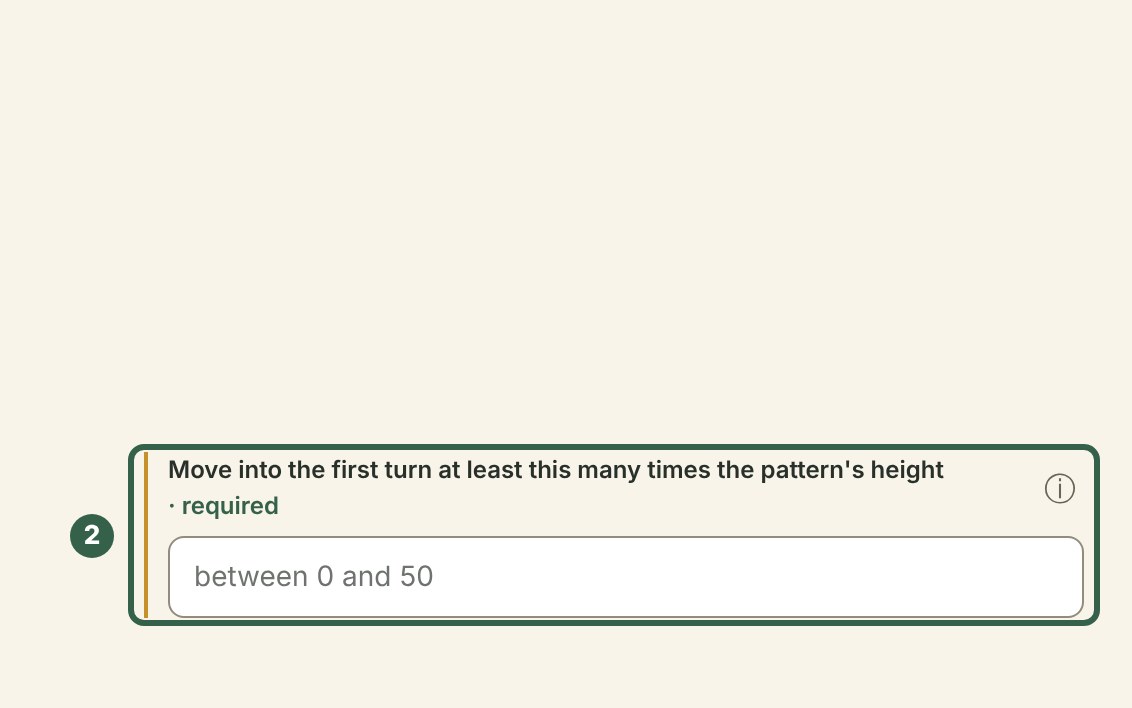
- Fill each box marked required with your own number. Read each box's name and its ⓘ.
- Save, and run your check from lesson 6 again on the practice chart.
- Help article Chart patterns and harmonic patterns
- Help article Help me choose a setting
Quick check
1. Where are the newer chart patterns?
2. What does the quasimodo trade?
3. A newer shape adds an empty box marked required. Who fills it?
0 of 3 answered.
Finished this lesson?
Tick it off and keep your place
Read the full notes
Studio's Which chart pattern list includes newer shapes: the Big W and Big M, ugly doubles, the quasimodo, measured moves, roofs, three peaks and domed house, Shark-32 and straight-line runs. Each has a box or two of its own, named for the shape. In Wildflower, press Change a rule, open the Chart pattern step, and pick one in Which chart pattern. Fill each box marked required with your own number, then run your check from lesson six again.
What you're building. Your rule is written and checked (lesson 6). This lesson is line 1 again, for the newer shapes. The rest of the list: lesson 7.
| My chart pattern rule |
|---|
| 1. The shape: … (top, bottom, or both) |
| 2. A break or a bounce: … |
| 3. Swings: … candles each side, the break within … candles |
| 4. Its numbers: flat … ticks, same level … ticks, … to … candles |
| 5. Harmonics only: each ratio's smallest … and largest … |
| 6. Stop … ticks, target … times, $… a trade, …-minute candles, … to … New York |
| 7. Checked: … trades gone through, and on my platform: … |
- From swings. The Big W and Big M, the ugly double bottom and top, the quasimodo buy and sell.
- Moves. The measured move up and down, and the straight-line run up and down.
- Tops. The roof and inverted roof, three peaks and domed house and its mirror, and Shark-32.
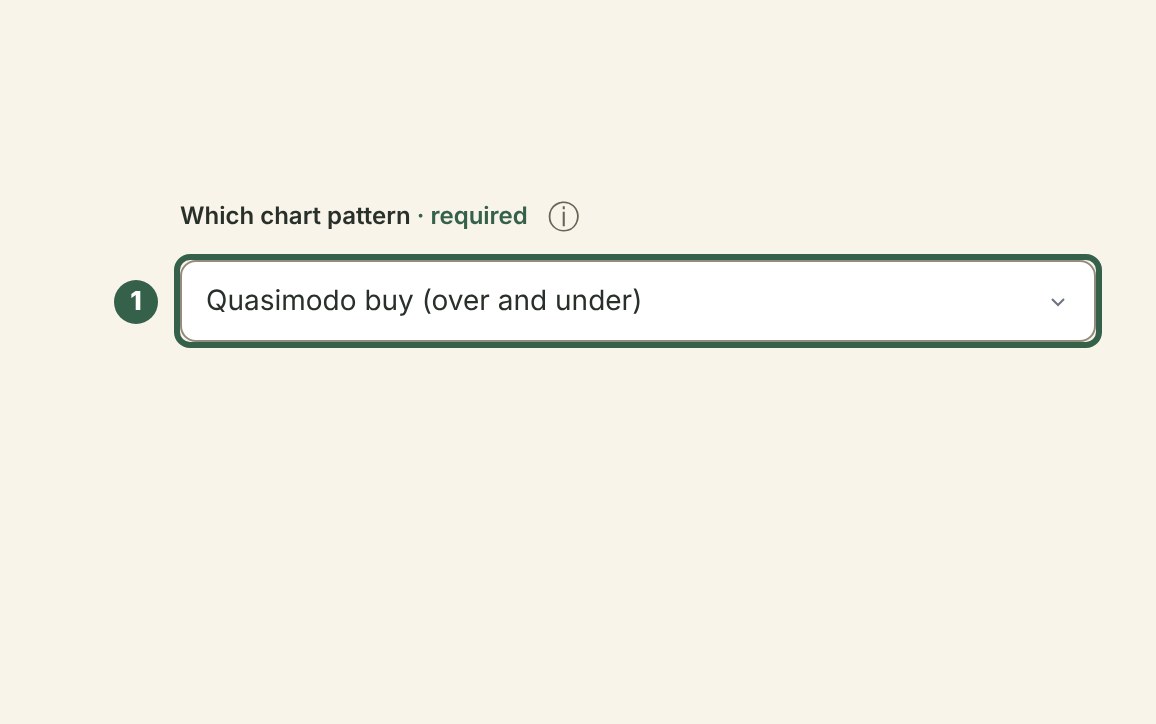
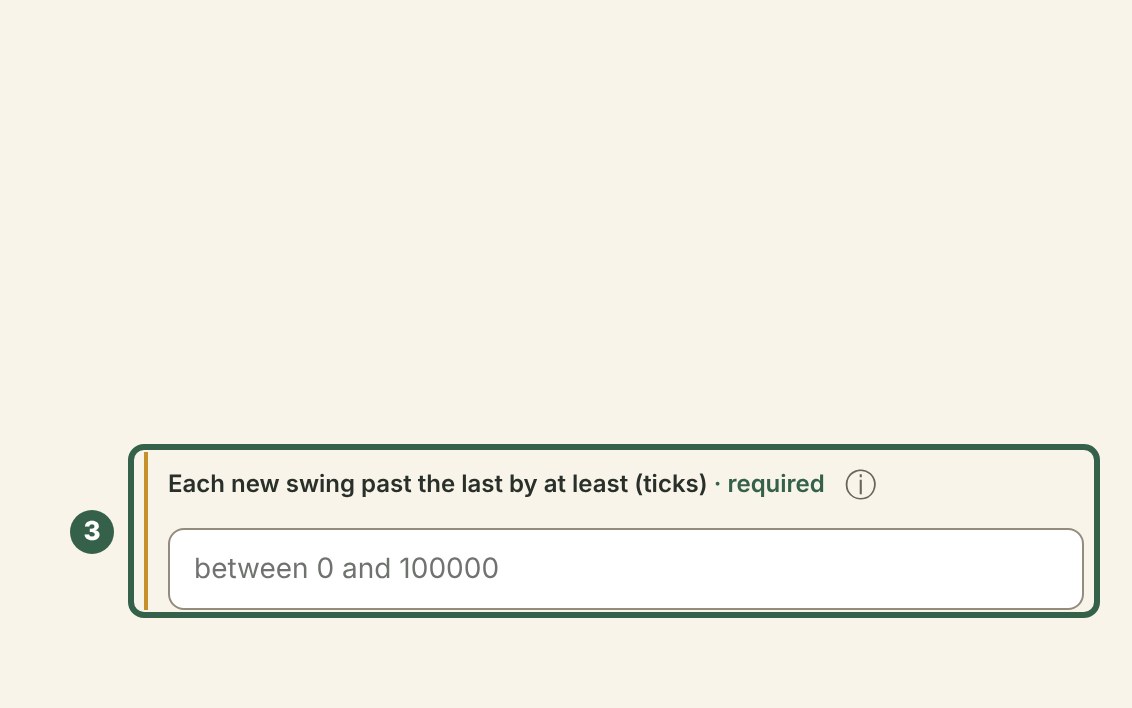
The quasimodo trades a touch back at a level, the first low (or high), not a close past a line.
How traders try a newer shape. We can't tell you which to choose. These are the common choices. Read each box's name and its ⓘ. Type their own number, measured on their charts. Try one shape at a time, each checked on its own.
Worked example
Made-up numbersSam tries the quasimodo
Sam is made up. He picks Quasimodo buy (over and under) in his strategy.
- He reads each new box's name and its ⓘ.
- He fills Each new swing past the last by at least (ticks), which was empty and required.
- He saves, and runs his Backtest on the practice chart again.
A new shape on line 1, checked the lesson 6 way.
Trading is risky. You can lose money. This lesson shows how Wildflower works. It isn't advice.