
Find any chart pattern or harmonic in Studio's list
Wildflower Trading School · Lesson 2.3.6.7 · This exercise is free

Your rule is written and checked. This lesson is for line one again: if you want a different shape, here's where to find it.
1 of 9
What you'll learn
- Line 1 again, for any shape. Studio lists 74 chart patterns and 12 harmonics.
- Which chart pattern sorts its shapes into five groups.
- Tops and bottoms are separate entries, and two-line shapes can go either way.
- A new shape shows only the boxes it reads. Fill any box marked required.
- Change line 1, then run your check from lesson six again.
Exercise
- Open your strategy in Strategies, press Change a rule, then the Chart pattern step.
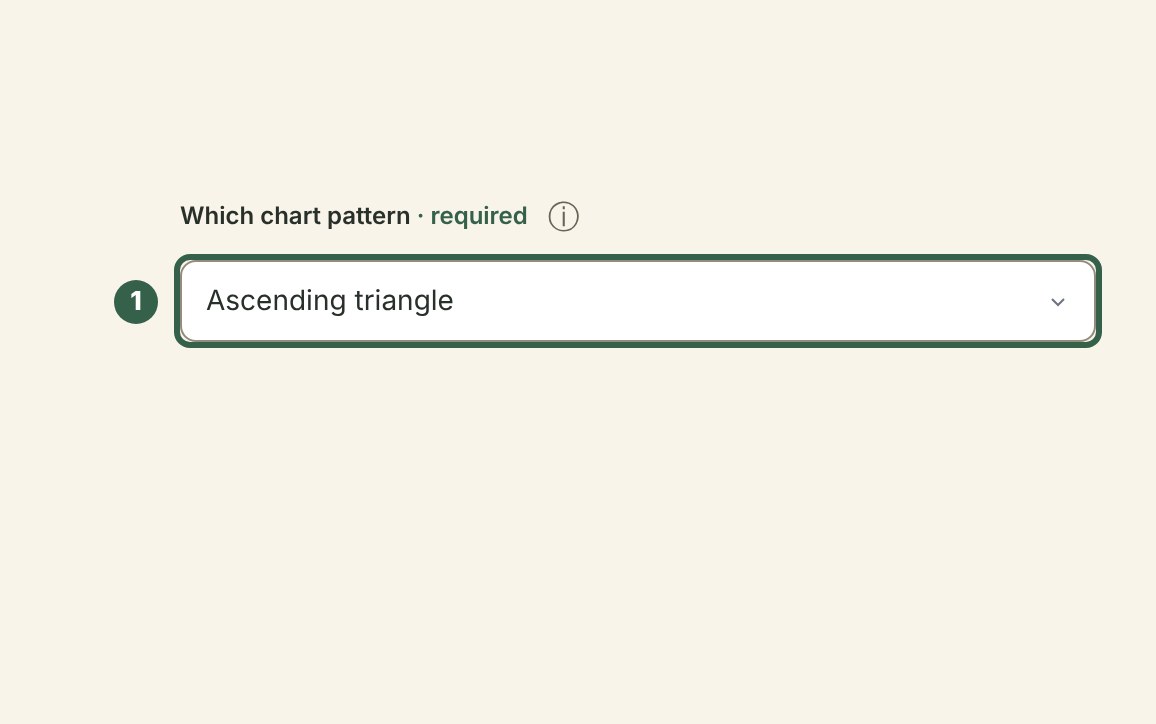
- Click Which chart pattern, and find one shape drawn from swings and one with two lines. Note the boxes each adds.
- If you change line 1, fill any box marked required, and press Save.
- Run your check from lesson 6 again on the practice chart.
- Help article Chart patterns and harmonic patterns
Quick check
1. How many shapes are in Which chart pattern?
2. Where are the harmonic patterns?
3. You pick a new shape and a box is empty, marked required. What do you do?
0 of 3 answered.
Finished this lesson?
Tick it off and keep your place
Read the full notes
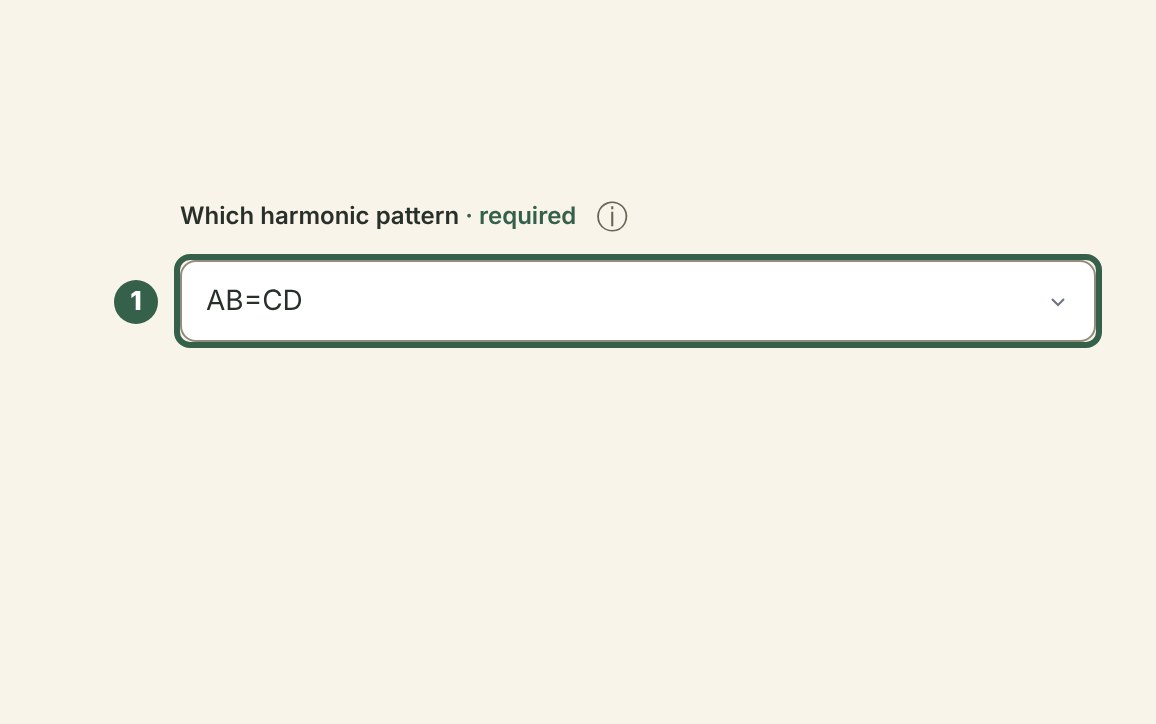
Studio has two pattern lists. Which chart pattern, in the Chart pattern step, holds 74 shapes in five groups. Which harmonic pattern, in the Harmonic pattern step, holds 12. Tops and bottoms are separate entries, and two-line shapes can go either way. In Wildflower, press Change a rule, open the step, and pick a shape from the list. Only the boxes that shape reads are shown, so a new shape may add an empty box marked required. Then run your check from lesson six again.
What you're building. Your rule is written and checked (lesson 6). This lesson is line 1 again, for any shape. Next lesson covers the newer shapes.
| My chart pattern rule |
|---|
| 1. The shape: … (top, bottom, or both) |
| 2. A break or a bounce: … |
| 3. Swings: … candles each side, the break within … candles |
| 4. Its numbers: flat … ticks, same level … ticks, … to … candles |
| 5. Harmonics only: each ratio's smallest … and largest … |
| 6. Stop … ticks, target … times, $… a trade, …-minute candles, … to … New York |
| 7. Checked: … trades gone through, and on my platform: … |
- Which chart pattern holds 74 shapes in five groups: drawn from swings, two lines, curved, a few candles, and gaps.
- Which harmonic pattern holds 12, in its own Harmonic pattern step.
- Tops and bottoms are separate entries. A two-line shape can go either way, so Buy, sell or both decides.
How traders pick a shape. We can't tell you which to choose. These are the common choices. A shape they already see on their charts. A shape that turns up often enough to test. One shape at a time, each checked on its own. The shapes themselves: Continuation and reversal patterns.
Worked example
Made-up numbersSam swaps his shape
Sam is made up. His strategy trades an ascending triangle.
- He picks Head and shoulders top in Which chart pattern.
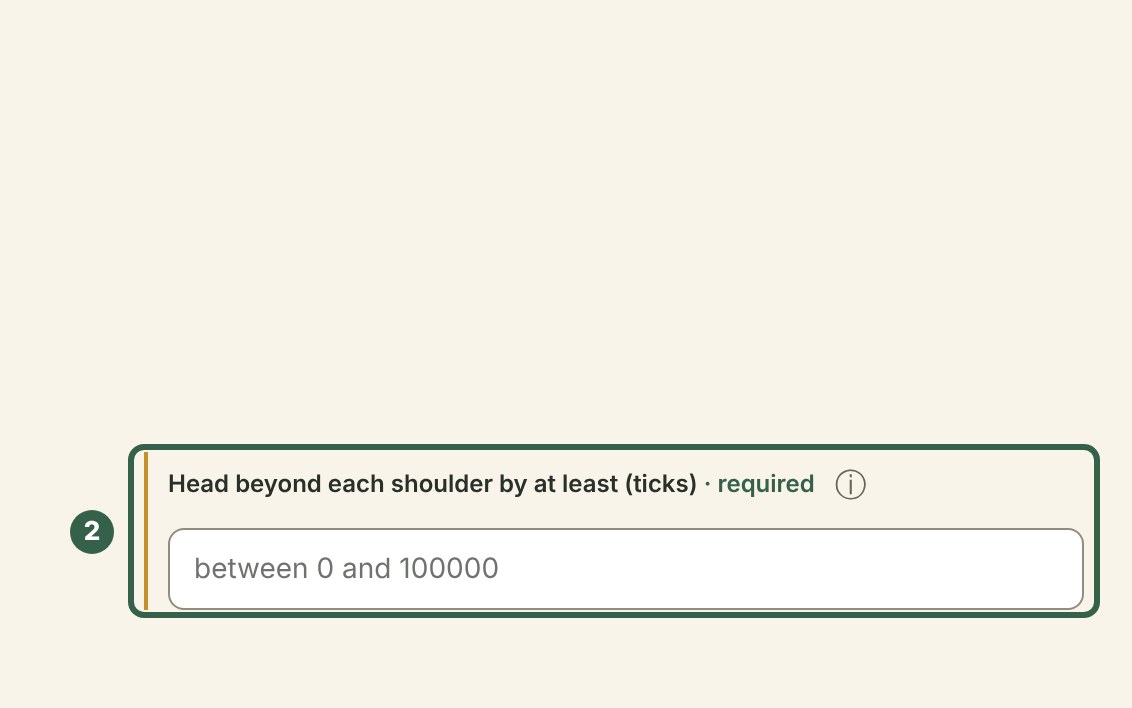
- A new box appears, Head beyond each shoulder by at least (ticks), empty and required.
- He types a number, saves, and gets Version 2.
- He runs his Backtest on the practice chart again and goes through the trades.
Line 1 changed, and checked again the lesson 6 way.
Trading is risky. You can lose money. This lesson shows how Wildflower works. It isn't advice.