
Bid, ask and spread: what they mean and how they work
By Bec, futures trader and founder of Wildflower · Updated
The bid is the highest price a buyer is waiting to pay right now. The ask, also called the offer, is the lowest price a seller is waiting to accept. The spread is the gap between them: the ask minus the bid. Buy at market and you start at the ask. Sell at market and you start at the bid.
What the bid and ask mean
At any moment, a market has two prices, not one.
The The highest price a buyer is waiting to pay right now. It’s the best price you can sell at straight away.More in the glossary is the highest price a buyer is waiting to pay. Buyers bid.
The The lowest price a seller is waiting to accept right now. It’s the best price you can buy at straight away. Also called the offer.More in the glossary is the lowest price a seller is waiting to accept. Sellers ask, or offer, so the ask is also called the offer. The two words mean the same price.
The ask sits above the bid. If a buyer and a seller agreed on a price, they’d trade, and those orders would be gone. The The gap between the ask and the bid: the ask minus the bid.More in the glossary is the space left between the best waiting buy and the best waiting sell.
From your side, it flips round. The bid is the best price you can sell at right now. The ask is the best price you can buy at right now.
Say the bid is 5,000.00 and the ask is 5,000.25. If you want to buy this instant, the best price on offer is 5,000.25. If you want to sell this instant, the best price on offer is 5,000.00. Nobody is waiting to trade at the price in between.
Where the bid and ask come from
Every futures exchange keeps an The list of every order waiting to buy or sell a contract, and at what price.More in the glossary: a list of every order waiting to buy or sell, and at what price. Buy orders sit below the current price. Sell orders sit above it.
The highest waiting buy is the best bid. The lowest waiting sell is the best ask. Together they’re called the top of the book, or the quote. When orders arrive, trade or get cancelled, the quote changes, sometimes many times a second.
How to work out the spread, step by step
1. Find the bid
The highest price a buyer is waiting to pay. Here, 5,000.00.
2. Find the ask
The lowest price a seller is waiting to accept. Here, 5,000.25.
3. Take the bid from the ask
5,000.25 minus 5,000.00 is 0.25. That’s the spread.
4. Count it in ticks
Here, one tick is 0.25, so the spread is one tick.
To turn ticks into money, multiply by the tick value. Say a contract’s tick is worth $5. A one-tick spread is then $5 per contract. That’s the cost of buying at the ask and selling straight back at the bid, before commission.
Which price you get when you buy or sell
A An order to buy or sell straight away at the best price available. It fills, but the price isn’t promised.More in the glossary trades with orders already waiting on the other side. A market buy trades with the sellers, so it starts at the ask. A market sell trades with the buyers, so it starts at the bid.
A limit order is different. A buy limit placed at the bid joins the queue of buyers and waits. It doesn’t pay the spread, but it only fills if a seller comes to it, and it may not fill at all. Read about order types.
When an order is bigger than the best price
The quote only shows the best price on each side. There may only be a few contracts waiting there. If your market order is bigger, it takes what’s at the best price, then moves on to the next price, and the next, until it’s filled.
Here, 5 contracts fill at two prices. The average is 5,000.40, not the 5,000.25 you saw. How many contracts wait at each price is called the depth of the book.
Why the spread widens and narrows
The spread isn’t fixed. It depends on how many orders are waiting near the current price, which traders call How easily you can buy or sell without moving the price. On charts, traders also use it for orders they think are waiting above highs and below lows.More in the glossary.
When lots of people are trading, orders crowd close together and the spread can stay at one tick for long stretches. When the market is quiet, such as overnight, or just before and after big news, fewer orders wait near the price and the spread can widen. Busy contracts tend to have narrower spreads than quiet ones.
Bid, ask and last price
The last price is the price of the most recent trade. A trade happens when one side takes the other side’s price, so the last price matches the bid or the ask at the moment it traded.
Most charts draw candles from the last price. So a chart can show price touching a level without anyone being able to buy there. Some charting platforms let you draw from the bid or the ask instead. Check which one yours uses.
Often confused with
Slippage. The difference between the price you expected and the price you got. The spread is there even when nothing moves. Read about slippage.
Commission. A fee your broker and the exchange charge per contract. The spread isn’t a fee anyone charges. It’s the gap between two sets of waiting orders.
Futures spread trade. A position in two related contracts at once, such as two delivery months, to trade the price difference between them. Same word, different idea.
The spread in a backtest
See your strategy with the spread included
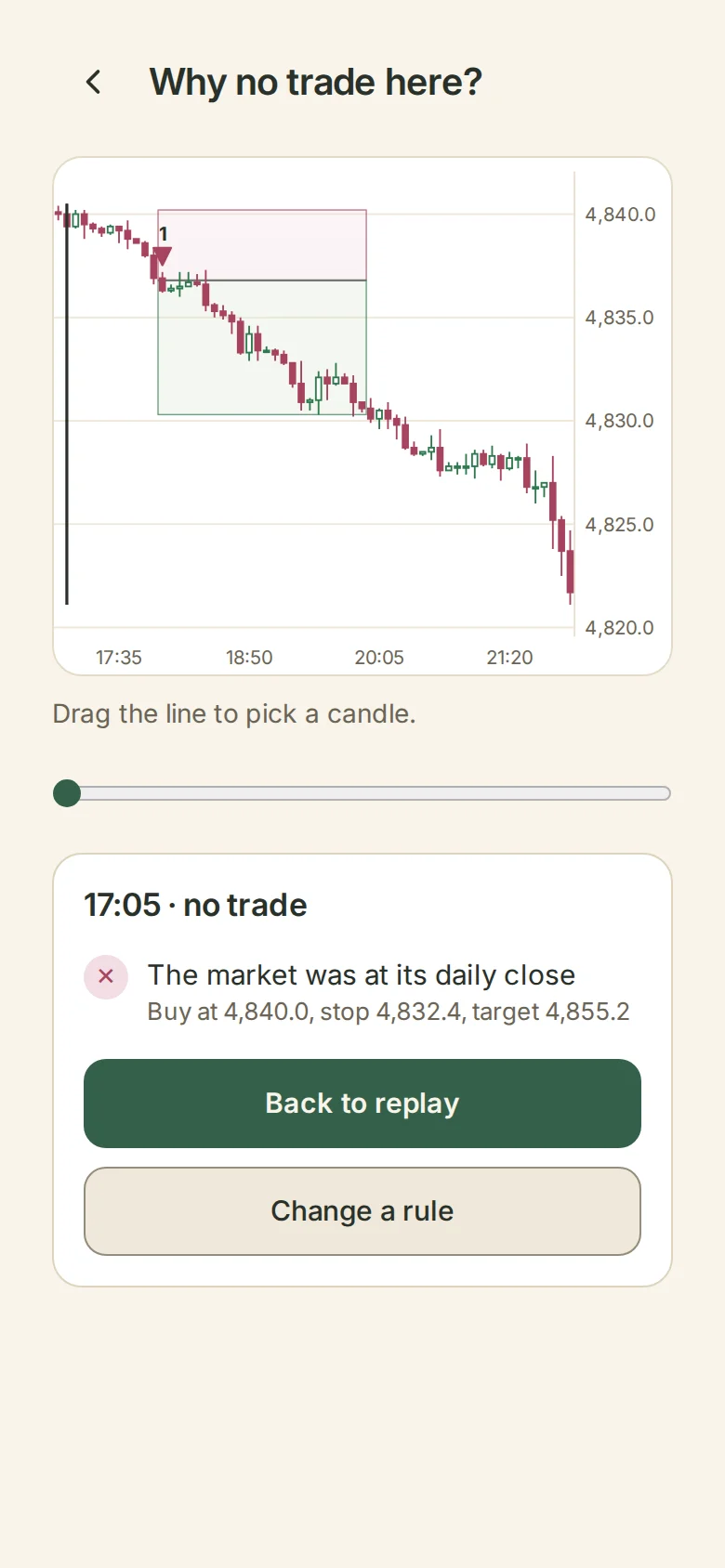
A chart shows traded prices, but a real order buys at the ask and sells at the bid. When you backtest a strategy in Wildflower, every result says what it assumed about the spread and slippage, and you can add extra slippage in ticks and set your own fee per contract. So every trade includes those costs. No coding needed.
Set it up and see how it works, free. Only pay when you backtest on real market history.
Common questions
What is the bid price?
The highest price a buyer is waiting to pay right now. It’s the best price you can sell at straight away.
What is the ask price?
The lowest price a seller is waiting to accept right now. It’s the best price you can buy at straight away.
Is the ask the same as the offer?
Yes. Sellers offer, so the ask is also called the offer. Buyers bid.
How is the spread worked out?
The ask minus the bid. In futures it’s often counted in ticks. More above.
Do I buy at the bid or the ask?
A market buy starts at the ask. A market sell starts at the bid. A limit order fills at its own price or better, if it fills.
Why does the spread widen?
Fewer orders are waiting near the price. That can happen when the market is quiet, or around big news.
Is the spread a fee?
No. It’s the gap between waiting buyers and sellers. Commission is the fee, charged per contract on top.
Does a chart show the bid or the ask?
Most charts draw from the last traded price. Some platforms let you switch to the bid or the ask.
What is a one-tick spread?
The ask is one tick above the bid, the smallest gap the contract allows.
Why is my fill different from the price on the chart?
The chart shows the last trade. A market buy starts at the ask, and a big order may fill at more than one price. Prices can also move before your order arrives.